
How Centric Software Addresses the Next Phase of Food & Beverage PLM
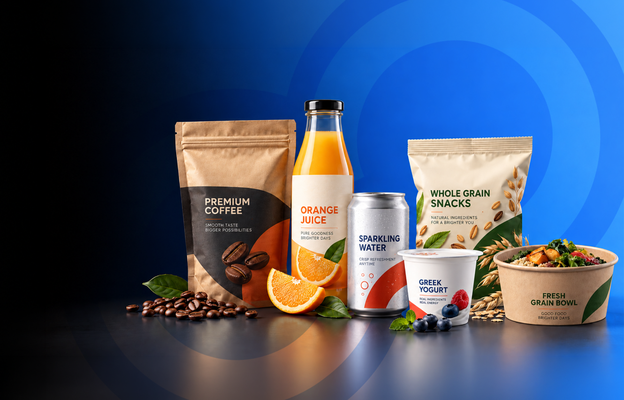


A new Gartner® Market Overview examines the forces reshaping food and beverage PLM and includes Centric Software among its Example Vendors.
Gartner has published a Market Overview of Product Lifecycle Management (PLM) software for food and beverage manufacturers, with Centric Software® included among the report’s Example Vendors.
Gartner states that the market is moving from fragmented software solutions toward connected product platforms as manufacturers respond to ingredient volatility, supply chain instability, regulatory change and increasing product complexity.
Gartner highlights five key developments: capability convergence, artificial intelligence, agile formulation, mandatory traceability and configure-to-order. The report also examines the growing importance of commercialization, Product Experience Management (PXM) and portfolio complexity in the evolution of food and beverage PLM.
These market developments provide a useful framework for considering the technology capabilities food and beverage manufacturers will increasingly require.
In this article, Centric Software examines the themes identified by Gartner and explains how Centric PLM™ and other solutions in the Centric Software portfolio address related formulation, compliance, supplier collaboration and commercialization requirements.
Centric Software delivers integrated, AI-powered enterprise solutions that take food and beverage products from concept to commercialization. Teams can plan, develop, formulate and source products, manage packaging, quality and compliance and bring products to market through connected data and workflows. These end-to-end capabilities accelerate time to market, reduce manual work and improve control over product costs, risk and margins.
AI moves from advantage to necessity
Gartner identifies AI applications across formulation, quality, compliance and supplier management in food and beverage PLM. The report anticipates a further shift toward agentic AI that orchestrates product development and lifecycle workflows. It also describes vendors beginning to adopt Model Context Protocol (MCP) to connect PLM data and capabilities with broader enterprise AI platforms.
For food and beverage teams, the practical opportunity is to reduce the work required to find information, prepare product data and act on it.
Centric AI brings these capabilities into product development through conversational interactions, agentic workflows, secure connectivity to third-party AI tools and prepackaged applications. For example, the AI Document Extraction Application converts information from supplier documents into structured PLM data, reducing manual entry. The Compliance Agent recommends suitable substitutes for blacklisted ingredients, accelerating the evaluation of formulation alternatives. Centric MCP connects third-party AI applications and agents to Centric capabilities and product data while maintaining control over permissions and business context.
Explore Centric AI.
Connecting product development with commercialization
For most of PLM’s history in food & beverage, the category stopped at the recipe. Packaging, labeling and go-to-market lived in separate systems, as though commercialization sat outside the product life cycle entirely. Gartner identifies commercialization and retail as one of the approaches shaping the market, with PLM capabilities increasingly working alongside Product Experience Management (PXM) and go-to-market capabilities. This reflects the broader movement Gartner describes from fragmented applications toward connected product platforms.
Working together, Centric PLM™ and Centric PXM™ connect product development with commercialization, carrying approved nutrition, allergen and packaging information into market-facing content. Teams can enrich that information with marketing copy and digital assets, adapt it for different markets and distribute it across retailer and ecommerce channels. This reduces manual handoffs and repeated data entry, keeps commercial content consistent with product specifications and accelerates launch preparation.
Explore Centric PXM.
Faster reformulation requires connected information
Ingredient price volatility, supply constraints and changing consumer and regulatory requirements are increasing the pressure to reformulate. Gartner highlights how food and beverage PLM solutions are evolving to address this challenge, with simulation capabilities that calculate the effects of ingredient substitutions on cost, nutrition and compliance. Teams can evaluate alternatives earlier, reducing the manual calculations that slow formulation decisions.
Centric PLM connects recipes, ingredient specifications, supplier information and costing so teams can assess formulation alternatives using shared product data. Recipe comparison enables teams to evaluate different options, while visibility into where ingredients are used identifies products affected by a proposed change. Together, these capabilities reduce spreadsheet-based analysis and give formulation, sourcing and compliance teams a clearer basis for selecting alternatives and coordinating the changes needed to bring reformulated products to market.
Bringing compliance into product development
Regulatory requirements increasingly affect how food and beverage products are formulated, packaged and labeled for different markets. Gartner highlights traceability, smart labeling and sustainability as key areas shaping PLM requirements. The report describes PLM as a foundation for connected product information, with links to enterprise and manufacturing systems extending that information across the supply chain.
Centric PLM connects compliance rules, ingredient specifications, supplier certificates and packaging information with product development workflows. Teams can evaluate products against defined requirements, identify missing documentation and assess how ingredient or packaging changes affect compliance before approval and launch. Managing these checks alongside development reduces manual document handling and late-stage rework, while maintaining a record of product changes and approvals for audit preparation.
Managing more products and regional variants
Alternative proteins, functional foods and personalized nutrition are adding new formulation, labeling and sourcing requirements to food and beverage portfolios. Gartner identifies growing product complexity, regional packaging variants and market-specific claims as drivers of PLM adoption. Looking ahead, the report also anticipates configuration rules for formulations and packaging that enable manufacturers to offer personalized products within defined safety, compliance and manufacturing constraints.
Centric PLM connects product specifications, formulations, ingredients and packaging data so teams can manage regional and private label variants within a shared development environment. Teams can track market-specific requirements, identify which products use a particular ingredient or component and coordinate updates across affected variants. This reduces the work of reconciling separate records and gives manufacturers greater control over expanding portfolios, with clearer visibility into what must change for each product and market.
What this means for food and beverage manufacturers
The market developments described by Gartner point to a practical priority: connecting the information and decisions that shape a product from development through launch. For food and beverage manufacturers, this means evaluating how quickly teams can assess formulation alternatives, identify compliance implications, coordinate product changes and prepare consistent information for commercial channels.
Centric Software addresses these requirements through integrated, AI-powered solutions that connect product development with commercialization. By reducing manual work and bringing teams together around shared product data, manufacturers can respond faster to changing requirements while maintaining control over costs, quality and launch readiness.
Gartner, Market Overview for PLM Software in Food and Beverage Manufacturing, By Brady Barnes, Rajan Saini, Claudia Clemens, August 19, 2026 (ID G00851587).
GARTNER is a registered trademark and service mark of Gartner, Inc. and/or its affiliates and is used herein with permission. All rights reserved.
Gartner does not endorse any vendor, product or service depicted in its research publications, and does not advise technology users to select only those vendors with the highest ratings or other designation. Gartner publications consist of the opinions of Gartner’s business and technology insights organization and should not be construed as statements of fact. Gartner disclaims all warranties, expressed or implied, with respect to this publication, including any warranties of merchantability or fitness for a particular purpose.
© 2026 Centric Software, Inc. All rights reserved.